ДОСЬЕ ГОНИТЕЛЯ
#BB-3093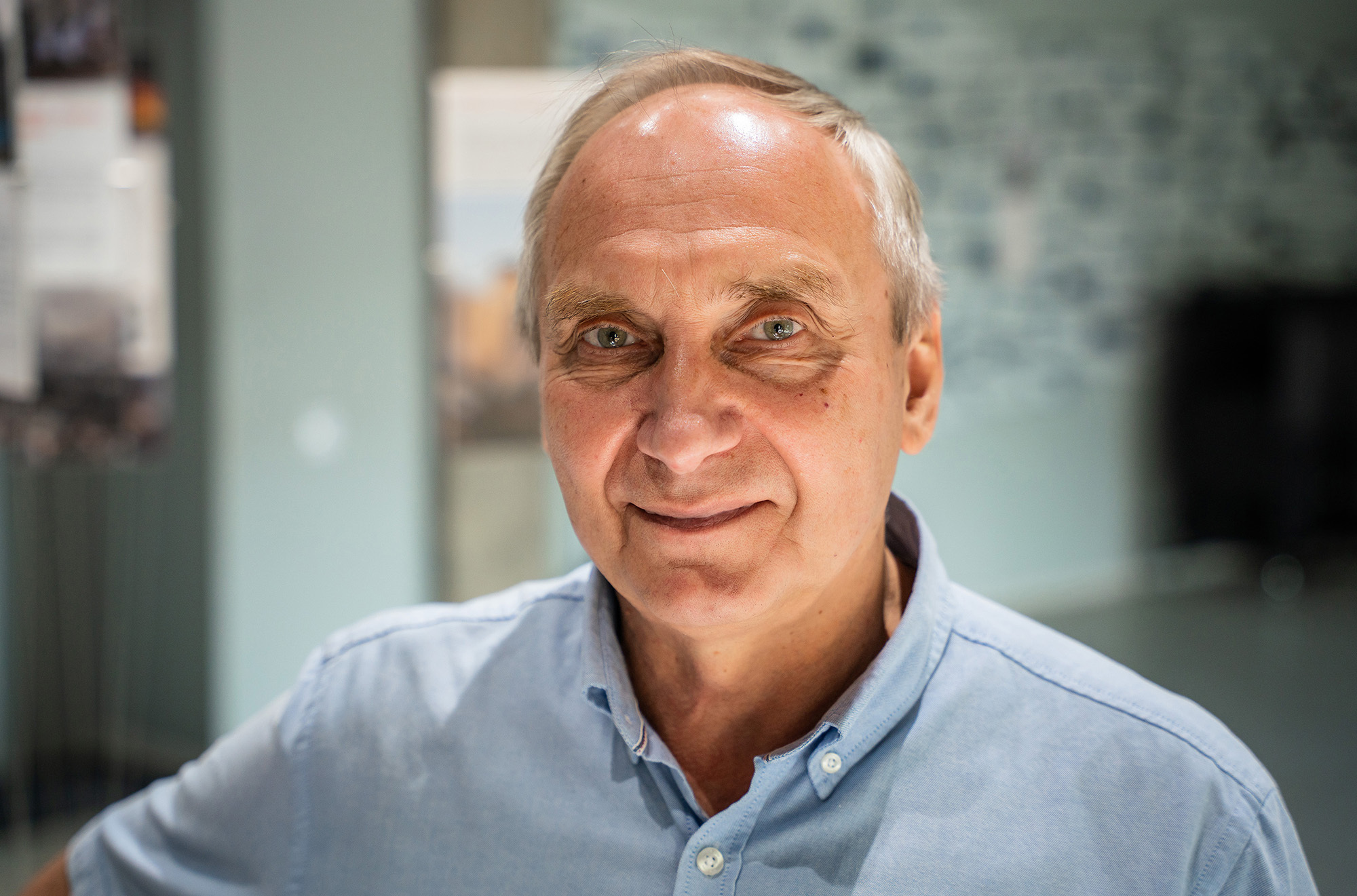
ДОКУМЕНТИРУЕТСЯ
Igor Kozlovsky
Religious scholar, member of SESS Expert Council
Полное досье
Ihor Kozlovskyi
Date of birth: 16 February 1954 – 06 September 2023
Religious studies scholar, Candidate of Historical Sciences, writer, public figure.
Senior Research Fellow of the Department of Religious Studies at the Hryhorii Skovoroda Institute of Philosophy of the National Academy of Sciences of Ukraine.
Member of the Expert Council on Freedom of Conscience and Religious Organizations under the Ministry of Culture of Ukraine. Served as an adviser to the Minister of Culture, Youth, and Sports of Ukraine.
Ihor Kozlovskyi belonged to a circle of Ukrainian religious scholars who served the interests of those persecuting the Ukrainian Orthodox Church (UOC).
Using his status and position, Kozlovskyi disseminated knowingly false information intended to discredit and provoke violence against UOC believers and clergy.
Moreover, the religious scholar actively cooperated with the State Service of Ukraine for Ethnopolitics and Freedom of Conscience (DESS) in initiatives aimed at violating the UOC’s right to freedom of religion.
He repeatedly distinguished himself by public rhetoric of hatred.
December 2, 2022 – In an interview with Radio Liberty (Radio Svoboda), Kozlovskyi publicly incited hatred against UOC clergy and believers.
The religious scholar claimed that UOC clergy had “numerous cases of collaborationism” and that “church shops are filled with ‘Russian world’ literature.”
“We know of many cases of collaboration and cooperation with the occupiers. Civil society spoke about this, journalists raised this issue. But it was indeed left without attention from the special services. This does not mean they did not know. They knew, because they were informed by specialists as well – about the fact that their church shops are filled with ‘Russian World’ literature, about sermons, about the language of hatred, which has already practically become part of the preaching activity of the UOC (MP).”
Video:
https://www.youtube.com/watch?v=HKRgJM4RnPA
December 24, 2022 – In a comment to Suspilne. Novyny, Kozlovskyi stated that the UOC was “becoming the enemy’s fifth column.”
Moreover, the religious scholar urged that state repressive actions should not be regarded as persecution of the Church.
“Are they (the UOC (MP) – Ed.) prohibited from conducting services? No. Are they prohibited from satisfying the religious needs of believers? No. If a religious organization begins to engage in political activity, especially during wartime, and becomes part of a fifth column – this is a danger to the state and society.”
January 2023 – DESS involved Kozlovskyi in conducting the so-called “religious studies expertise” of the Statute on the Governance of the UOC.
At the session of January 10, 2023, the head of the Legal Department of the Kyiv Metropolis of the UOC, Archpriest Oleksandr Bakhov, took part.
The lawyer expressed distrust toward a number of experts, including Kozlovskyi.
The priest stated:
“It is a well-known fact that some members of the Expert Group are not only parishioners of the Orthodox Church of Ukraine, but also demonstrate bias and hostility toward the UOC, which has repeatedly been published on social media and in the media.”
“The draft law banning the UOC (MP) must be adopted immediately. Any delay will lead to representatives of the UOC (MP) continuing to promote their claims that their church is being persecuted. This poses a danger. Therefore, the already prepared draft law must be adopted right now,” Kozlovskyi stated on the importance of the rapid adoption of the law banning the UOC during a broadcast on the Espreso TV channel on December 11, 2022, according to a lawyer.
(Source: Information and Educational Department of the UOC)
February 1, 2023 – DESS announced that as a result of the religious studies expertise of the Statute on the Governance of the Ukrainian Orthodox Church regarding the presence of a church-canonical link with the Moscow Patriarchate, experts concluded that the UOC remained part of the Russian Orthodox Church and did not even have the status of an autonomous Church.
The expertise itself was conducted by biased supporters of banning the UOC and with numerous violations, including those involving Kozlovskyi.:
State Service of Ukraine for Ethnopolitics and Freedom of Conscience
February 1, 2023
‼️ In accordance with the decision of the National Security and Defense Council of Ukraine of December 1, 2022, “On certain aspects of the activities of religious organizations in Ukraine and the application of personal special economic and other restrictive measures (sanctions),” put into effect by the Decree of the President of Ukraine of December 1, 2022, the State Service of Ukraine for Ethnopolitics and Freedom of Conscience, within a two-month period, ensured the conduct of a religious studies expert examination of the Statute on the Governance of the Ukrainian Orthodox Church for the presence of a church-canonical connection with the Moscow Patriarchate (the Russian Orthodox Church).
To carry out this task, an Expert Group was established, consisting of five professors, Doctors of Science and one Candidate of Science – specialists in the field of religion; theologians; scholars of freedom of conscience; state–confessional relations experts; and theologians who have professional scholarly publications in history, sociology, philosophy, religion in general, and in particular in the study of Eastern Orthodoxy.
Thus, the Expert Group arrived at the following generalized conclusions:
• The adoption of the new version of the Statute on the Governance of the UOC (of 27.05.2022) and the Resolution of the UOC Council did not lead to the severing of the church-canonical connection of the Ukrainian Orthodox Church with the Russian Orthodox Church. The Statute of the UOC, as a structural subdivision of the ROC, provides for certain rights of independence, but does not create an autocephalous Church and remains unchanged.
• The UOC, in relation to the ROC, has a church-canonical connection of a part with the whole. The relations of the UOC with the ROC are not relations of one independent (autocephalous) church with another independent autocephalous church, because the UOC does not have the status of an autonomous church that would be recognized by other churches; therefore, from the standpoint of ecclesiology and canon law, it is a structural subdivision of the ROC that has certain rights of independent formation, but without its own canonical subjectivity.
• The current activity or inactivity of the highest bodies of church authority and governance of the UOC indicates that the UOC continues to remain within the ROC under its subordination. It does not act as an independent (autocephalous) Church and has not proclaimed its own independence (autocephaly). No documents or actions that would indicate the transformation of the UOC into an independent religious organization in relation to the ROC have been identified by the members of the Expert Group.
The full Conclusion of the Expert Group can be accessed via the link in the first comment.
The expertise was carried out in accordance with the decision of the National Security and Defense Council of Ukraine of December 1, 2022, “On Certain Aspects of the Activities of Religious Organizations in Ukraine and the Application of Personal Special Economic and Other Restrictive Measures (Sanctions),” enacted by Presidential Decree.
ПРИЧАСТНОСТЬ К ИНЦИДЕНТАМ
Связанные инциденты не найдены