ДОСЬЕ ГОНИТЕЛЯ
#BB-3123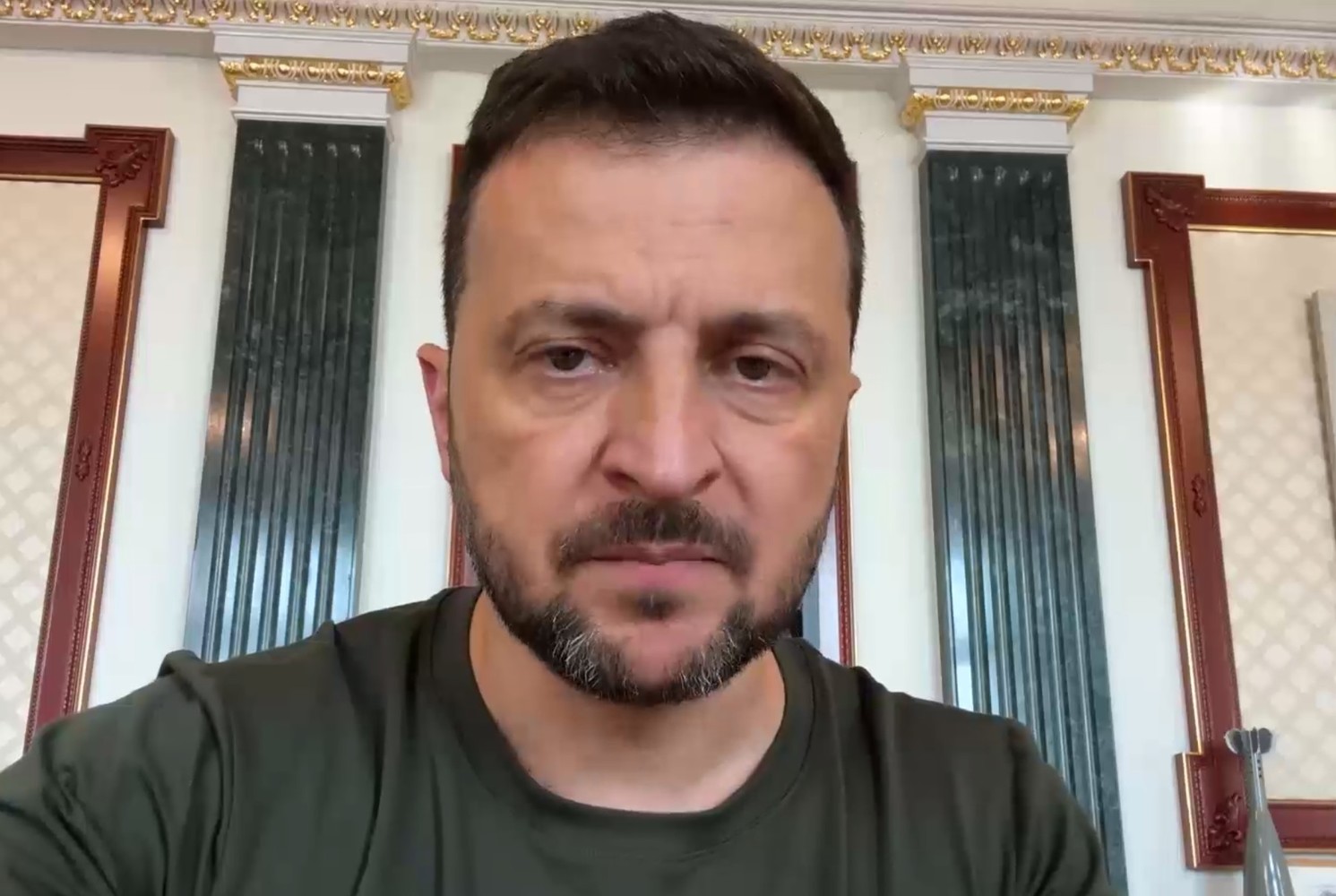
ДОКУМЕНТИРУЕТСЯ
Volodymyr Zelenskyy
President of Ukraine, Supreme Commander-in-Chief of the Armed Forces
Полное досье
Volodymyr Zelensky
Date of birth: January 25, 1978
President of Ukraine, Supreme Commander-in-Chief of the Armed Forces of Ukraine.
Since assuming office as president, Volodymyr Zelensky has pursued policies that effectively encourage persecution and violation of UOC believers’ rights.
Despite publicly declaring non-interference by the state in Church affairs, Zelensky's government has failed to act, and in some cases even encouraged, crimes against Orthodox clergy and believers.
The situation changed on December 1, 2022, when Zelenskyy announced the state's de facto policy of oppressing the rights of the Ukrainian Orthodox Church. The measures announced by the president were aimed at the forcible expropriation of the Kyiv Pechersk Lavra and the creation of a law paving the way for a legal ban on the Orthodox Church.
Zelenskyy's decision imposed unconstitutional sanctions against the clergy, journalists, and human rights activists of the Ukrainian Orthodox Church. Under his pressure, a law aimed at destroying the Ukrainian Orthodox Church was passed.
On February 22, 2021, the head of the Department for Citizens' Appeals of the Office of the President of Ukraine announced that a collective appeal from UOC believers addressed to President Volodymyr Zelenskyy would not be considered by the head of state .
According to the text of the OP Letter of February 22, 2021, No. 22/008352-26, the believers' appeal to the President of February 15, 2021, cannot be considered, since "the powers of the President of Ukraine do not include the repeal of laws, and according to the Constitution of Ukraine, the adoption of laws falls within the powers of the Verkhovna Rada."
The Union of Orthodox Lawyers noted that in their appeal to the President, believers reported an increase in the number of seizures and illegal re-registrations of UOC communities, requested that all possible measures be taken to ensure their constitutional right to freedom of religion, and pointed out abuses and manipulations by officials of the Ministry of Culture of Ukraine. The believers also drew the President's attention to numerous violations of the Constitution, restrictions on their rights, discrimination against millions of believers based on their religion, and, as a result, an increase in interfaith conflicts and confrontations.
The Union of Orthodox Lawyers reported that "such a formal and bureaucratic attitude toward the requests and hopes of ordinary people, believers, cannot but cause outrage and bewilderment."
The lawyers noted that "the repeal of laws is indeed not within the powers of the President of Ukraine. However, according to Article 102 of the Constitution of Ukraine, the President is the guarantor of the Constitution of Ukraine and the rights and freedoms of man and citizen. The right to freedom of religion and the separation of state and church is constitutional and is enshrined in Article 35 of the Basic Law of Ukraine. Article 93 of the Constitution defines the President's right of legislative initiative in the Verkhovna Rada of Ukraine. Bills designated by the President of Ukraine as urgent are considered by the Verkhovna Rada of Ukraine out of turn."
Thus, the UOL (Union of Orthodox Lawyers) notes, "the President of Ukraine has sufficient legal instruments to develop and implement a mechanism for the legal regulation of social relations in the area of worldview and religion that will comply with the Constitution of Ukraine."
On June 15, 2021, during the All-Ukrainian Forum "Ukraine.30," Zelensky commented on the prayer vigil of UOC believers near the Verkhovna Rada, allegedly confusing it with the Opposition Platform - For Life rally that took place after the vigil and had nothing in common with the UOC prayer service.
"Look at what's happening outside the Verkhovna Rada today. I'm just so sorry. You saw them, grandmas and children? Wearing yellow Opposition Platform — For Life caps. Something's not quite right in the church again. And so everyone's so interested in this issue, and so by chance, thousands of grandmas showed up wearing yellow Opposition Platform — For Life caps. So, what does that look like?" Zelenskyy said.
With this statement, the president attempted to discredit Orthodox believers who asked him to protect their rights.
On December 1, 2022, President Volodymyr Zelenskyy announced in a video address that he had ordered an "inspection of the legal basis and compliance with the terms of use by religious organizations of property located on the territory of the Kyiv-Pechersk National Historical and Cultural Reserve."
This was one of the decisions made at the National Security and Defense Council meeting that day. Zelensky believes that with this decision, the state "guarantees Ukraine's spiritual independence."
This appeal became the de facto beginning of an active campaign of violating of the UOC believers’ rights and the forced eviction of monks from the Kiev-Pechersk Lavra.
Zelensky also announced the National Security and Defense Council's decision to submit to the Verkhovna Rada "a bill on the impossibility of the activities in Ukraine of religious organizations affiliated with centers of influence in the Russian Federation."
The draft law by Zelenskyy's National Security and Defense Council, enabled large-scale falsifications of the status of the Ukrainian Orthodox Church and set the stage for the destruction of the Orthodox Church.
(Source: Office of the President of Ukraine)
On December 1, 2022, Zelensky issued a decree enacting the National Security and Defense Council's decision "On Certain Aspects of the Activities of Religious Organizations in Ukraine and the Application of Personal Special Economic and Other Restrictive Measures (Sanctions)."
Decree of the President of Ukraine No. 820/2022 of December 1 was published on the website of the state’s head.
According to the National Security and Defense Council's decision, published in a decree, the Cabinet of Ministers is instructed to submit a bill to the Verkhovna Rada within two months to prohibit the operation of religious organizations affiliated with centers of influence in the Russian Federation in Ukraine. The bill must comply with international law on freedom of conscience and Ukraine's obligations related to its accession to the Council of Europe.
The government was also instructed to urgently resolve the issue of classifying the State Service of Ukraine for Ethnic Policy and Freedom of Conscience as a central executive body, whose activities are directly directed and coordinated by the Cabinet of Ministers. According to the presidential decree, the government must also resolve the issue of the functional subordination of local government departments, whose responsibilities include the implementation of the right to freedom of conscience and religion, and the activities of religious organizations, to the State Service for Ethnic Policy.
Furthermore, the Cabinet of Ministers must ensure, within two months, that the legal basis and conditions for the use of property located on the territory of the Kyiv-Pechersk National Historical and Cultural Reserve are verified and complied with by religious organizations.
The National Security and Defense Council also instructed the State Service for Ethnopolicy to conduct a religious studies examination of the Charter of the Ukrainian Orthodox Church within two months to determine whether it has a canonical connection with the Moscow Patriarchate and, if necessary, to apply measures provided by law.
In addition, the National Security and Defense Council supported the proposals submitted by the Security Service of Ukraine (SBU) regarding the application of personal special economic and other restrictive measures and applied sanctions against individuals "in accordance with the appendix."
On December 1, 2022, Zelensky, by decree of the National Security and Defense Council, introduced personal sanctions against a number of the UOC’s hierarchs and clergy.
The list of individuals was published in an appendix to the National Security and Defense Council's decision on the Ukrainian Orthodox Church on the President's website.
Vadim Novinsky, a deacon of the UOC.
Metropolitan Pavel (Lebed), the abbot of the Kyiv-Pechersk Lavra.
Metropolitan Lazar (Shvets) of Simferopol and Crimea.
Metropolitan Elisey of Izyum and Kupyansk of the UOC (dismissed by the Synod of the UOC). Bishop Joseph of Romny and Buryn (dismissed by the Synod of the UOC).
Bishop Agathon (Opanasenko) of Koktebel.
Metropolitan Platon (Udovenko), administrator of the Feodosia Diocese.
Bishop Kalinnik of Bakhchisaray, vicar of the Simferopol Diocese.
Bishop Alexy of Dzhankoy and Razdolsk, an administrator of the Dzhankoy Diocese. Archbishop Arkady of Rovenky and Sverdlovsk, administrator of the Rovenky Diocese.
The sanctions include: blocking assets, restricting trade operations, limiting, partially or completely stopping the transit of resources, flights, and transportation throughout Ukraine, preventing the outflow of capital outside of Ukraine, etc.
Particularly noteworthy is paragraph 7: a ban on the leasing of state property by residents of a foreign state and persons directly or indirectly controlled by residents of a foreign state or acting in their interests.
The sanctions are imposed for a period of 5 years.
It is important to note that Ukrainian legislation does not provide for the introduction of personal sanctions against Ukrainian citizens.
With his decision, Zelensky sanctioned the extrajudicial execution of clergy representatives .
On December 2, 2022, Volodymyr Zelenskyy made a new statement on religious issues in his traditional video address.
"We recently took some steps to guarantee the spiritual independence of our people. I see that people support these steps, and they support them very strongly. And that's not all. There will be more. Ukraine will never again stop halfway," the President declared.
The day before this address, Zelenskyy, in violation of Ukrainian law and the Constitution, imposed sanctions against members of the UOC clergy and announced the creation of a law aimed at suppressing religious freedom.
(Source: Office of the President of Ukraine)
On December 11, 2022, Volodymyr Zelensky, by Decree 863, enacted the National Security and Defense Council's decision "On the application of personal special economic and other restrictive measures (sanctions)" against bishops and other representatives of the Ukrainian Orthodox Church. The decree was published on the website of the President of Ukraine.
According to the text, sanctions are imposed against:
The Administrator of the UOC, Metropolitan Anthony of Boryspil and Brovary,
the Head of the Department for External Church Relations of the UOC,
Metropolitan Meletius of Chernivtsi and Bukovyna, Metropolitan Luke of Zaporizhzhia and Melitopol
, Metropolitan Panteleimon of Lugansk and Alchevsk, Archbishop Paisius of Constantynivka, Archimandrite John, abbot of the Melitopol Savvinsky Monastery, Archimandrite Alexy, abbot of the Dormition Cathedral in Kherson.
The sanctions are imposed for a period of 5 years.
On December 28, 2022, Zelensky, by decree No. 898/2022 of December 28, 2022, deprived 13 clergy of the Ukrainian Orthodox Church of their citizenship, LB.ua reports.
The publication clarified that the decree was not officially published because it contains personal information.
The State Migration Service received notification of the loss of citizenship for 13 priests. According to current regulations, they may be subject to deportation.
The list of the UOC representatives included representatives of the Donetsk, Crimea, and Romny dioceses, as well as Odessa and Chernivtsi -Bukovyna.
LB.ua learned about this from its own sources.
List of UOC clergy stripped of citizenship:
Yeletskikh Anatoly Ivanovich - Metropolitan of Tulchin and Bratslav Jonathan;
Anitsoy Sergey Leonidovich – a vicar of the Tulchyn diocese, Bishop Sergiy of Ladyzhyn ;
Vinichenko Vladimir Semenovich - Archbishop of Novoazovsk Varsonofy (Donetsk diocese);
Gradomsky Viktor Anatolyevich - Archpriest Viktor, rector of the Church of Alexander Nevsky (Odessa Diocese);
Donenko Nikolai Nikolaevich – a vicar bishop, Bishop Nestor of Yalta;
Egorenko Valentin Vladimirovich - Metropolitan of Chernivtsi and Bukovyna Meletius;
Maslennikov Alexey Alexandrovich - Metropolitan Joseph of Romny and Buryn (Romny diocese);
Seredniy Ivan Petrovich - Metropolitan of Dnepropetrovsk and Pavlograd Ireney;
Skobiola Andrey Petrovich - Archbishop of Volnovakha Ambrose, vicar of the Donetsk diocese;
Taranov Alexander Borisovich - Archbishop of Rovenky and Sverdlovsk Arkadiy;
Shvets Rostislav Filippovich - Metropolitan of Simferopol and Crimea Lazar;
Shinkarev Viktor Sergeevich - Archbishop of Constantynivka Paisius;
Igor Fedorovich Yakovenko – Metropolitan of Svyatogorsk , Vicar of the Donetsk Diocese, Abbot of the Holy Dormition Svyatogorsk Lavra.
According to LB.ua, the possibility of introducing similar measures against six more people is currently being explored.
On January 24, 2023, President Zelenskyy enacted the National Security and Defense Council's decision to impose sanctions against ten representatives of the Ukrainian Orthodox Church. Presidential Decree No. 43/2023 was published on the President's website.
Sanctions were introduced in early December, and the current decree tightens them further. Two new items have been added to the sanctions list:
A complete ban on transactions involving securities issued by sanctioned entities, as well as
the cessation of cultural exchanges, scientific cooperation, and educational and sports contacts with foreign countries and foreign legal entities.
The National Security and Defense Council previously introduced restrictions that remain in the current version of the document: asset blocking, restrictions on trade operations, restrictions, partial or complete cessation of resource transit, flights, and transportation through Ukraine, prevention of capital flight outside of Ukraine, etc.
The ban also applies to the leasing of state property by residents of foreign states and persons directly or indirectly controlled by residents of foreign states or acting in their interests.
The list of individuals subject to sanctions was published in an appendix to the National Security and Defense Council's decision.
1. Vadim Novinsky, deacon of the UOC.
2. Metropolitan Pavel (Lebed), abbot of the Kiev-Pechersk Lavra. 3. Metropolitan Lazar (Shvets) of Simferopol and Crimea. 4. Metropolitan Elisey of Izyum and Kupyansk of the UOC (dismissed by the Synod of the UOC). 5. Bishop Joseph of Romny and Buryn (dismissed by the Synod of the UOC).
6. Bishop Agathon (Opanasenko) of Koktebel.
7. Metropolitan Platon (Udovenko), administrator of the diocese of Feodosia.
8. Bishop Kalinnik of Bakhchisaray, vicar of the Simferopol diocese.
9. Bishop Alexy of Dzhankoy and Razdolsk, administrator of the Dzhankoy diocese. Archbishop of Rovenki and Sverdlovsk Arkady, administrator of the Rovenki diocese.
On June 28, 2023, Volodymyr Zelenskyy registered bill 9431, which provides for the discriminatory cancellation of Christmas celebrations in Ukraine on January 7, as well as the postponement of the dates of Statehood Day and Defenders' Day, which coincide with the Orthodox holidays of the Day of the Baptism of Rus' and the Protection of the Virgin Mary.
The explanatory note states that “the purpose of the bill is to reject the Russian legacy of imposing Christmas on January 7 and to establish the date of celebrating Christmas on December 25.”
Zelensky recalled that the OCU "on May 24, 2023, at the Bishops' Council, approved a complete transition from September 1, 2023, to the new Julian calendar, which is used by the majority of Orthodox churches around the world and which, in particular, provides for the celebration of the Nativity of Christ on December 25, rather than January 7."
As a consequence, “the dates for celebrating Ukrainian Statehood Day (from July 28 to July 15), which commemorates the memory of the outstanding statesman, Saint Vladimir the Great, Equal-to-the-Apostles Prince of Kyiv, and the Day of Defenders of Ukraine (from October 14 to October 1), which is associated with Ukrainian military traditions of celebrating the Day of the Protection of the Holy Mother of God,” have been moved.
The bill proposes eliminating holidays on January 7, July 28, and October 14. In addition to December 25, it proposes making July 15 and October 1 holidays.
On November 6, 2023, before the vote on bill 8371 banning the Ukrainian Orthodox Church, David Arakhamia wrote to MPs asking them to vote in favor, ”Ukrainska Pravda” claims, citing a source in ”Servant of the People”.
The publication notes that he “motivated the deputies just before the vote and reminded them in chats that this was Zelensky’s demand.”
At the same time, Arakhamia himself is called a “slight supporter” of the law, “who was already considering the option of postponing its consideration on the day of the vote.”
On December 21, 2023, Zelensky, speaking via video link to participants of the Christmas Prayer Breakfast in Kyiv, declared the supposedly high level of religious freedom in the Ukrainian capital.
"I am glad that Kyiv is one of those capitals where freedom reigns and people can freely practice their faith," Zelensky said.
In his words, “We cherish in our hearts respect for life, for those with whom we are close in life, and we strive to feel that our hearts are united – united by the world.”
“This kind of unity is truly felt when we are sincere, when we do not betray our souls, and when we boldly stand up for life,” the President added.
Zelensky deliberately disseminated false information with the aim of misleading representatives of foreign states.
On December 24, 2023, Zelenskyy, standing in front of the Dormition Cathedral of the Kyiv-Pechersk Lavra, congratulated Ukrainians on Christmas and made a number of false statements.
"Today, all Ukrainians are together, celebrating Christmas on one date as one big family, one nation, one united country," Zelenskyy assured. He believes that "today, more than ever, our common prayer, the people's prayer, will be stronger."
"Today it will unite millions of voices, more than ever before," the President is convinced. "And it will be heard without a two-week time gap, together with Europe and the world."
Zelensky believes this prayer is "unique" because it will be "for people, for peace, for justice, for life." He especially emphasized that this prayer will be "from different faiths" and therefore "will have no boundaries."
The President mentioned that Ukrainians “are on the path to achieving spiritual independence, freedom of our faith from the ideology of slavery, from a cult that has nothing human or sacred.”
Zelensky stated that the Kyiv Pechersk Lavra is “a symbol of Ukrainian history, culture, religion, Orthodoxy, and all of Eastern Christianity.”
"The Lavra is a place of strength for people," the President noted, emphasizing that the monastery will always be "a source of inspiration for those who believe in the victory of truth and Ukraine."
In fact, Zelensky made a discriminatory statement excluding believers and clergy of the Ukrainian Orthodox Church from the ranks of Ukrainian citizens.
(Source: UOJ)
On February 6, 2024, members of parliament received a signal from Ukrainian President Volodymyr Zelensky that bill No. 8371 banning the Ukrainian Orthodox Church be adopted by the Verkhovna Rada in its second reading as quickly as possible.
Hromadske reports this, citing its own source.
According to Mykola Kniazhitsky, a member of parliament from European Solidarity, the bill is already being considered by the Humanitarian Committee, and the draft law itself is expected to be tightened with amendments from the Security Service of Ukraine (SBU), as well as simplify the transition of communities from the Ukrainian Orthodox Church to the Orthodox Church of Ukraine (OCU).
According to the document submitted by the SBU, religious organizations may be liquidated if their "authorized persons" commit crimes against the foundations of Ukraine's national security.
According to the publication, the committee is working to "strengthen" the bill so that it can pass its second reading and avoid criticism from the European Union.
Another member of parliament from the EU, Volodymyr Vyatrovich, asserts that there is a common desire in the Rada to submit the bill to the floor for consideration, but there are numerous disagreements about the form in which it should be voted on.
On July 23, 2024, the head of the Verkhovna Rada Committee on Humanitarian Policy, People's Deputy from the "Servant of the People" party, Nikita Poturaev, stated that Ukrainian President Volodymyr Zelenskyy's position on Law 8371 remains unchanged: it must be adopted as soon as possible.
He announced this during a broadcast on Radio Liberty.
Poturaev recounted that this year, when he met with Zelensky, the President stated in the presence of witnesses that, due to the difficult political climate, the law needed to be introduced into the session hall and passed quickly.
"The President's position, as far as I know, hasn't changed and hasn't. But I know that certain people came to the Office (Presidential – Ed.), not from the Office, and tried to misinform the President: to lie to him that this law was beneficial to European Solidarity. But Vladimir Alexandrovich is very good at distinguishing lies from truth, and, as far as I know, this didn't affect him in any way," the MP concluded.
On August 16, 2024, Zelensky announced that he had met with members of the Council of Churches and Religious Organizations and thanked them for their support of the course towards "spiritual independence."
"The Verkhovna Rada has been presented with a bill that can truly guarantee that there will be no manipulation of the Ukrainian Church from Moscow. This bill should be effective and should enhance Ukraine's sense of conciliarity, our true unity. Spiritual unity," Zelenskyy stated.
In fact, the president once again expressed his support for the discriminatory law banning the UOC.
On August 24, 2024, in his congratulatory address on the 33rd anniversary of Independence Day, Ukrainian President Volodymyr Zelenskyy again spoke of "spiritual independence," using hate speech against the believers and clergy of the Ukrainian Orthodox Church.
"Independence has many dimensions, each of which must be achieved to defend comprehensive independence. This includes economic independence, energy independence, and the spiritual independence of the Ukrainian people. And Ukrainian Orthodoxy is today taking a step toward liberation from Moscow's devils," Zelenskyy stated, apparently referring to Law 8371, passed by the Verkhovna Rada, which effectively bans the activities of the Ukrainian Orthodox Church.
On August 24, 2024, Ukrainian President Volodymyr Zelenskyy signed the bill No. 8371, "On the Protection of the Constitutional Order in the Sphere of Activities of Religious Organizations," adopted as a whole by the Verkhovna Rada, which was intended to ban the Ukrainian Orthodox Church.
The law comes into force 30 days after its publication. However, it does not include one clause: according to it, UOC communities will have nine months to sever ties with the Russian Orthodox Church.
On October 19, 2024, Metropolitan Arseniy , rector of the Dormition Svyatogorsk Lavra, who was arrested on charges of passing information to Russia about the Ukrainian Armed Forces, stated that his arrest was part of a broader campaign of persecution of the UOC by the Zelensky’s government.
In his exclusive interview with The Independent, the Metropolitan called on Great Britain to use its influence to end the repression against the UOC.
He emphasized: "The Ukrainian Orthodox Church is facing a great trial. Our holy churches and shrines have been destroyed, and our priests and parishioners are dying in the war. Meanwhile, the Ukrainian government is attempting to ban the Church. Priests are being illegally arrested, and our places of worship are being seized and taken away from us."
The abbot of the Svyatogorsk Lavra categorically rejected accusations that the Ukrainian Orthodox Church is working for the Russian government. "The Ukrainian authorities unfairly accuse the Ukrainian Orthodox Church of being a mouthpiece for Russian propaganda. Nothing could be further from the truth. The Ukrainian Orthodox Church is a thousand-year-old Christian denomination. We do not preach any ideology. We preach the good news of God's promise of forgiveness of sins," the metropolitan stated.
The Svyatogorsk Lavra, which the bishop has led since 1995, suffered during the war. He spoke of how the monastery continues to support local residents despite the destruction: "We, the Svyatogorsk Lavra, suffered along together with our fellow Ukrainians during the war. Our local parishioners are fighting on the front lines, and our historic monastery was severely damaged by bombing... Despite all the good our monastery has accomplished, the authorities are trying to undo our hard work."
Metropolitan Arseniy also spoke of his harrowing detention: "In violation of the law and criminal procedure laws of Ukraine, I have been incarcerated in a correctional facility for almost six months. My court hearings offer no hope of respite." He described how he was transported to the court in Slovyansk under harsh conditions: "During the entire journey, I was handcuffed and denied food or water... I am 56 years old, and my health is beginning to deteriorate."
Concluding his interview, the Metropolitan expressed hope for a swift end to the persecution of the Ukrainian Orthodox Church: "I pray that this ordeal will end, that I will return to Svyatogorsk, that our monastery will be restored, and that peace will return to Ukraine. I also pray that the attacks on the Ukrainian Orthodox Church will cease. We, Ukrainians, must be united."
On November 19, 2024, during his speech in the Verkhovna Rada, Zelensky announced the continuation of the state's dialogue with all churches in the country, with the exception of the UOC, which he called the Moscow Church.
“Provided that the secular nature of state institutions is preserved, we have and can develop partnerships between the state and the Church, between the state and religious communities,” the President said.
Zelensky noted that Ukraine has a successful example of such cooperation—the All-Ukrainian Council of Churches and Religious Organizations, which serves as a foundation for dialogue between the state and all religious communities. He emphasized that this dialogue can help determine which of these models can strengthen spiritual independence and social work in the country.
"Of course, this isn't about the Moscow Church. The time of those who sanctify terror is over," the guarantor concluded.
On December 6, 2024, on the Day of the Armed Forces of Ukraine, Volodymyr Zelenskyy spoke at a "military prayer breakfast" in the Refectory Church of the Kyiv-Pechersk Lavra, which was expropriated from the believers of the Ukrainian Orthodox Church.
For his speech, the authorities erected a platform, and those present sat at tables. There were screens were placed on both sides of the platform, projecting a close-up image of the President.
On February 4, 2025, Zelensky responded to Tucker Carlson's accusations of dictatorship and the banning of religious denominations in an interview with British journalist Piers Morgan.
According to Zelensky, Carlson, in speaking about the ban, is repeating Putin's narratives.
"It doesn't matter. It's all a lie. It's Putin's narrative. Putin has a narrative about the Moscow Patriarchate, the Russian Church. Putin has a narrative about the elections, about my illegitimacy, about dictatorship. This is said by a man who has been in power for 30 years, a bloody dictator, a murderer who violated the territorial integrity of Ukraine and more. And as for religions, as for elections, it's all Putin's narrative," Zelenskyy stated.
The president attempted to conceal his government's widespread crackdown on religious freedom in the country.
He also assured that “the entire population is against the Moscow Patriarchate,” obviously meaning the UOC.
In the same interview, Zelensky spread blatantly false information that the UOC was allegedly being united with the ROC through “legal ties.”
"At the legislative level, parliament decided that there can be no Moscow Patriarchate. This means that this Church must legally re-register. There can be no legal connection with Moscow," Zelensky stated, without specifying what he meant by "legal connection."
The President assured that “the Moscow Patriarchate is being closed; there can be no legal connection.”
“And they must be a Ukrainian Church legally under Ukrainian jurisdiction,” he concluded.
On April 24, 2025, in an interview with American journalist Ben Shapiro, filmed near the walls of St. Sophia Cathedral in Kyiv, Volodymyr Zelenskyy stated that the Ukrainian Orthodox Church is controlled by the KGB, and that the Ukrainian government does not close any churches.
Commenting on a journalist's assertion that the West is accusing the Ukrainian government of "repressing religious freedom, especially in relation to the Russian Orthodox Church," Zelensky stated that "the issue is not with the Moscow church itself, but with the fact that in Russia, the Moscow Patriarchate is effectively another branch of the secret services."
"The problem arose when their (Russian – Ed.) intelligence services began to control churches in Ukraine. It's wrong for the church to be under their control, and Moscow shouldn't control our church. Their KGB, their intelligence services, can't control or manage the Ukrainian church – they simply shouldn't be here," Zelenskyy stated.
At the same time, he did not voice a single fact or evidence that there are any connections between the UOC, or, even more so, “management.”
According to him, “legislative changes in Ukraine are connected with the fact that there can be no connection between Moscow and the Ukrainian church.”
"No one has closed anything, but we can't allow Russian intelligence services to control the church in Ukraine. Everyone is against such legal ties. We're talking not only about intelligence-level ties, but also about legal ties that have existed for many years. This shouldn't happen," Zelenskyy said, without specifying what he meant by "intelligence-level ties" or "legal ties."
The President also said that he regularly holds meetings with the All-Ukrainian Council of Churches and Religious Organizations (AUCCRO), assuring that representatives of all faiths are invited: "We always invite everyone; this is important." However, representatives of the Ukrainian Orthodox Church were absent from the most recent meetings between the AUCCRO and Zelensky.
"As for the alleged pressure on religious organizations, it simply doesn't exist. You won't find any evidence of such pressure, as we don't conduct any behind-the-scenes negotiations with religious institutions or their leaders," Zelenskyy assured.
On June 28, 2025, Zelensky awarded an OCU cleric Ivan Chokalyuk , who supervised the bandits who beat UOC priests during an attempt to seize the Holy Spirit Cathedral in Chernivtsi on June 17, 2025.
By Decree of President Zelensky No. 424/2025 "On awarding state awards of Ukraine on the occasion of Constitution Day of Ukraine," OCU cleric Ivan Chokalyuk received the Order of Merit, 3rd degree.
The order was presented "for significant achievements in strengthening Ukrainian statehood, courage and dedication demonstrated in defending the sovereignty and territorial integrity of Ukraine, significant personal contribution to the development of various spheres of public life, upholding the national interests of our state, and conscientious fulfillment of professional duty."
On July 2, 2025, the SBU reported that Zelensky signed a decree revoking the citizenship of His Beatitude Metropolitan Onufriy.
Law enforcement officials claimed that in 2002, the Primate of the Ukrainian Orthodox Church allegedly received Russian citizenship without notifying the Ukrainian authorities. The SBU also stated that "according to available information ," Metropolitan Onufriy "maintains ties with the Moscow Patriarchate and deliberately obstructed the Ukrainian Church's canonical independence from the Moscow Patriarchate."
"Despite the full-scale invasion, Berezovsky (Onufriy) continues to support the policies of the Russian Orthodox Church and its leadership, in particular Patriarch Kirill ( Gundyaev )," the SBU press service wrote.
On July 2, 2025, in an evening address, Zelensky commented on his decision todeprive His Beatitude Metropolitan Onufriy of Ukrainian citizenship.
Without naming the Primate of the UOC, Zelensky effectively accused him of working “against spiritual independence” and publicly incited hatred.
"We are also continuing our entirely fair work against various individuals who have aligned themselves with Russia. Politically influential figures holding Russian passports, individuals working against Ukrainian independence in all its dimensions, including spiritual independence, anyone who supports or justifies aggression—there is no place for these individuals in Ukraine, nor will there ever be one," the president said.
According to him, “new Ukrainian sanctions” are also being prepared and “there will be decisions by the National Security and Defense Council.”
(Source: Zelensky's official Telegram channel)
On September 5, 2025, in an interview with Israeli-American evangelical journalist Joel Rosenberg on the largest American Christian platform TBN, Volodymyr Zelensky assured that all accusations from the West about persecution of the clergy and believers of the Ukrainian Orthodox Church are "manipulations."
Zelensky deliberately spread false information to cover up his crimes.
Moreover, the president publicly incited hatred towards believers and clergy of the UOC.
In particular, Rosenberg mentioned Tucker Carlson's programs, in which the American journalist accused Zelensky's government of closing churches and jailing priests.
In response, Zelenskyy assured that "more than 70% of people (in Ukraine – Ed.) are believers, and their faith, their aspirations, and their churches have never been restricted by anyone. On the contrary, the state has always supported them, and they are very free." He repeated this regarding the Ukrainian Orthodox Church, which he calls the "Russian Church."
"As for the Russian Orthodox Church, first of all, no one was persecuted," he said, switching to the topic of Russia's shelling of Ukrainian churches.
"All these claims are manipulative . The fact is that Ukrainian law states that no religious organization or any organization can have legal ties with an aggressor country. And that's true. But it's perfectly normal during a war to have no legal ties with the Russian Orthodox Church. And this isn't about persecuting or closing any specific Church," Zelenskyy assured.
In response, Rosenberg thanked Zelensky for the clarification and stated that the talk about the persecution of the UOC in Ukraine is a "terrible lie."
On October 31, 2025, Zelensky enacted the National Security and Defense Council's decision to impose personal sanctions against individuals involved in the activities of journalists covering crimes against believers and clergy of the Ukrainian Orthodox Church.
In particular, we are talking about the Union of Orthodox Journalists and the resource "First Cossactsky".
The sanctions were imposed at the initiative of the SBU.
The National Security and Defense Council instructed the Cabinet of Ministers, the Security Service of Ukraine, the National Bank, and the Commission of State Awards and Heraldry to "ensure the implementation and monitoring of the effectiveness of personal special economic and other restrictive measures (sanctions)."
The Ministry of Foreign Affairs of Ukraine has been instructed to “inform the competent authorities of the European Union, the United States of America, and other states about the application of sanctions and to raise with them the issue of introducing similar restrictive measures.”
According to Decree No. 810/2025, the following were subject to sanctions for a period of 10 years and for an indefinite period:
Vishnevetsky Viktor Viktorovich (born January 8, 1968)
Bobechko Vladimir Ostapovich (born 08/30/1973)
Zharkikh Ekaterina Denisovna (born 05/10/1994)
Zabudko Taras Ivanovich (born 02/24/1977)
Zoshchuk Alexey Petrovich (born May 7, 1983)
Kalinchuk Ruslan Vasilievich (born August 5, 1987)
Klimenko Lev Nikolaevich (born March 2, 1999)
Moisienko Nikolay Viktorovich (born May 26, 1983)
Ovcharenko Andrey Vladimirovich (born June 19, 1979)
Ovcharenko Irina Dmitrievna (Vershinina Irina Dmitrievna) (born March 1, 1978)
Stupnitsky Valery Antonovich (born April 5, 1973)
Chertilin Sergey Igorevich (born August 11, 1989)
The sanctions imposed include:
Blocking of assets;
ban on distribution of media on the territory of Ukraine; termination of electronic communication services; restrictions on trade operations; deprivation of state awards of Ukraine.
The decree places particular emphasis on blocking internet resources. Providers are instructed to block access to the website https://spzh.eu/ru/ (which is already blocked) as well as social media channels.
( Source : UOJ )
ПРИЧАСТНОСТЬ К ИНЦИДЕНТАМ
Связанные инциденты не найдены